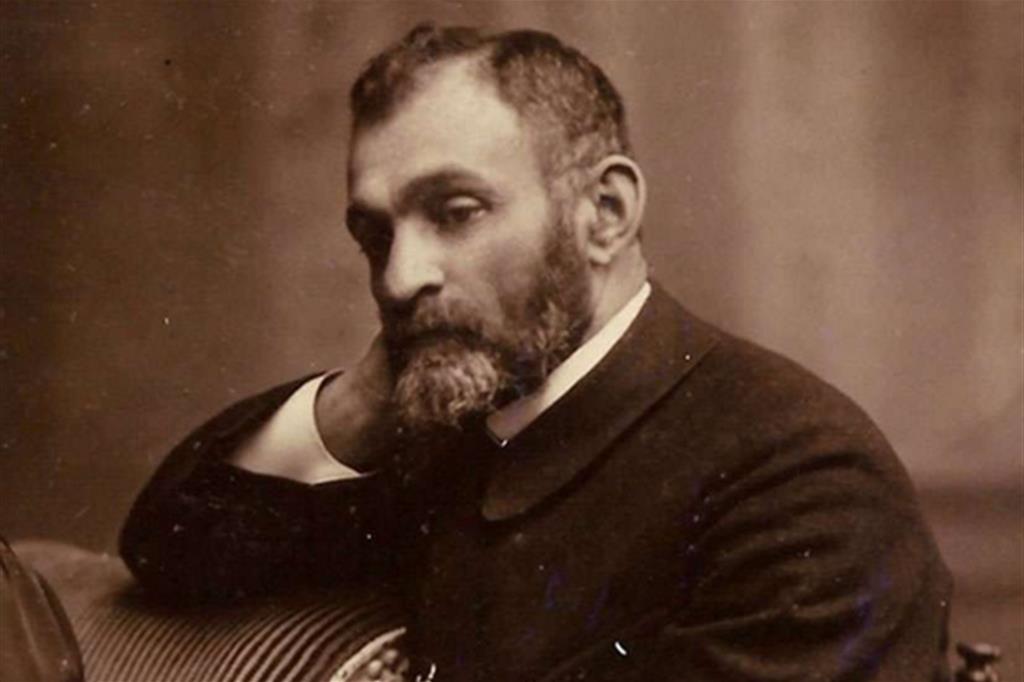
Abstract:
Lev Shestov’s philosophy centers on the primacy of the irrational in human existence. Opposing classical Western rationalist systems, Shestov argues that reason cannot capture life’s unpredictability, suffering, or existential contingency. Influenced by Russian literature and biblical exemplars, he situates philosophy as an engagement with the irrational, fostering ethical and spiritual insight rather than systematic knowledge. This article examines Shestov’s critique of rationalism, his philosophy of tragedy, and the religious and contemporary significance of the irrational, highlighting its enduring relevance for existential thought, ethics, and resistance to technological rationalization.
Keywords: Shestov, irrationalism, existential ethics, Russian literature, faith, philosopy of tragedy
Introduction
Shestov’s uncompromising opposition to reason can be understood not merely as irrationalism but as profound antirationalism. Across his works, he critiques the dominance of reason and seeks an escape from determinacy through engagement with the irrational, though he never precisely defines it.
Influenced by Russian classical literature, particularly Tiutchev’s claim that »thought, once spoken, is a lie,«[1] Shestov maintains that the irrational cannot be fully articulated or objectified. Attempts to express it invariably diminish its essence. Philosophy, therefore, should not attempt to subsume the irrational under systematic reasoning but preserve it within human concern, allowing life’s horrors, uncertainties, and ethical dilemmas to remain present and unmediated.
The Irrational Remainder and Philosophy of Tragedy
Shestov identifies the “irrational remainder” as those dimensions of experience resistant to formal language or scientific definition. Science, in his view, seeks to suppress or transform this remainder into abstract concepts, as when questions of life are relegated to Kantian “things-in-themselves.”
For Shestov, philosophy should preserve rather than neutralize this remainder. His philosophy of tragedy exemplifies this approach: it acknowledges life’s horrors instead of displacing them into abstract metaphysical realms. The irrational remainder thus forms the basis of an “irrational ethics,” demanding recognition of the existential, often tragic, dimensions of human life.
Shestov draws upon Russian literary exemplars, Dostoevsky, Tolstoy, Chekhov, where the individual confronts extreme circumstances, moral uncertainty, and societal constraint. These narratives reveal the ethical significance of individual struggle, prefiguring later existentialist concerns with authenticity, freedom, and the human confrontation with absurdity.
Critique of Rationalist Philosophy
Shestov’s antirationalism emerges most clearly in his critique of Western rationalist systems, from Aristotle to Kant and Hegel. He identifies two principal errors of rationalist philosophy:
- Overvaluation of reason: Rationalist systems assume that all existential questions can be resolved through systematic thought, marginalizing the contingencies, suffering, and unpredictability of life.
- Denial of individual freedom: By subordinating singular human experience to universal laws or historical necessity, these systems obscure the moral and existential significance of personal struggle.
Shestov does not reject reason entirely but insists that its authority is limited. True understanding arises from engagement with life’s crises, doubts, and confrontations with mortality, not from abstract reasoning. Biblical and literary exemplars – Job, Abraham, Dostoevsky’s protagonists – illustrate the limitations of reason and the primacy of existential courage, faith, and ethical commitment.
The Religious Dimension of Philosophy
Faith occupies a central place in Shestov’s philosophy. The “inner self”[2] contrasts with the rationalized, externally mediated self; it manifests through direct experience of suffering, awe, and existential struggle.
Shestov draws on biblical narratives – Abraham’s sacrifice of Isaac, Job’s lamentations, Christ before the Inquisitor – to show that authentic moral action requires a “leap” beyond reason. Faith is not blind belief but radical engagement with life’s uncertainty and absurdity, a source of ethical and existential freedom.
In this framework, Shestov develops an “irrational ethics,” privileging personal responsibility and courage over universal principles. Confrontation with the irrational, including mortality and existential uncertainty, is the path to moral and spiritual authenticity.
Contemporary Relevance
Shestov’s thought resonates in an era dominated by technological rationalization, algorithmic governance, and transhumanist aspirations. His insistence on the primacy of the irrational challenges the reduction of human experience to calculable systems, emphasizing the ethical and existential necessity of preserving individuality, freedom, and moral depth.
By prioritizing the irrational, Shestov highlights that authentic engagement with existence emerges from confronting life’s absurdities, rather than seeking coherence or predictability. His philosophy offers guidance for contemporary debates on human freedom, technological optimization, and the cultivation of existential authenticity.
Conclusion
Lev Shestov situates the irrational, absurd, and existentially contingent at the center of philosophical reflection. Reason and systematic knowledge, while useful, cannot fully encompass lived experience. Authentic existence demands confrontation with mortality, uncertainty, and moral challenge. Shestov’s philosophy, drawing on Russian literature, biblical narratives, and existential ethics, underscores the irreducible complexity of human life and offers a model of engagement that remains profoundly relevant for contemporary philosophical, ethical, and socio-cultural thought.
Bibliography:
Шестов, Л. Шекспир и его критик Брандес. Санкт-Петербург: Типография А. М. Менделевича, 1898.
—. Начала и концы. Санкт-Петербург: Типография М. М. Стасюлевича, 1908.
—. «Лев Исакович Шестов». В кн.: Первые литературные шаги. Автобиографии современных русских писателей. Под ред. Ф. Ф. Фидлера. Москва: Тип. И. Д. Сытина, 1911, 173–176.
—. Sola fide: Только верою. Греческая и средневековая философия. Лютер и церковь. Париж: YMCA Press, 1966.
—. Киркегард и экзистенциальная философия. Москва: Прогресс – Гнозис, 1992.
—. Сочинения в двух томах. Т. 1. Москва: Наука, 1993.
—. Сочинения в двух томах. Т. 2. Москва: Наука, 1993.
—. Сочинения в двух томах. Т. 1. Томск: Водолей, 1996.
—. Сочинения в двух томах. Т. 2. Томск: Водолей, 1996.
—. Лекции по греческой философии. Москва: Русский путь, 2001.
[1] In the work Praise of Folly (Похвала глупости), Shestov explicitly refers to Tyutchev: »It has long been known that a spoken thought is a lie« (Шестов 1908, 121).
[2] Лев Шестов, Сочинения в двух томах, том 2 (М.: Наука, 1993), 301–306.